


Introduction
Gaming technology has evolved from simple consoles and basic computers into a massive digital ecosystem that combines powerful hardware, intelligent software, immersive displays, high-speed connectivity, and advanced accessories. In 2026, gamers have more options than ever for building a gaming setup that delivers smooth performance, realistic graphics, responsive controls, and immersive entertainment.
The best gaming technology in 2026 is being shaped by artificial intelligence, advanced graphics processing, high-refresh-rate displays, portable gaming devices, cloud gaming, virtual reality, and smarter gaming accessories. These technologies are making games more realistic while giving players greater flexibility in how and where they play.
Whether you are a competitive PC gamer, console enthusiast, mobile gamer, or casual player, understanding the latest gaming hardware, software, and accessories can help you create a better gaming experience.
Gaming PCs: The Foundation of High-Performance Gaming
A powerful gaming PC remains one of the best options for gamers who want maximum performance and customization.
Modern gaming PCs can combine powerful processors, advanced graphics cards, high-speed memory, fast solid-state storage, and sophisticated cooling systems.
The graphics card is especially important for demanding games because it handles visual rendering and advanced effects. Technologies such as ray tracing and AI-powered upscaling can improve visual quality while maintaining smoother performance.
A good gaming PC should also have sufficient RAM and fast storage. Solid-state drives can significantly improve loading times compared with traditional hard drives.
For serious gamers, a balanced combination of CPU, GPU, memory, storage, cooling, and power supply is more important than focusing on a single component.
Gaming Laptops Are Becoming More Powerful
Gaming laptops offer a combination of performance and portability.
Modern gaming laptops can deliver high frame rates, advanced graphics, fast displays, and powerful processors in relatively portable designs.
They are particularly useful for gamers who need a device that can handle both gaming and everyday productivity.
When selecting a gaming laptop, important factors include GPU performance, CPU capability, RAM, storage, display refresh rate, cooling, keyboard quality, and battery performance.
Although gaming laptops may not offer the same upgrade flexibility as desktop PCs, their portability makes them attractive for many users.
Advanced Gaming Monitors
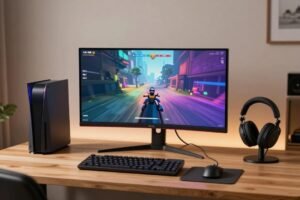
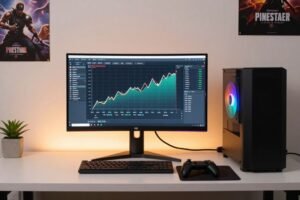
A high-quality gaming monitor can make a significant difference in gameplay.
High refresh rates provide smoother motion, while low response times can improve responsiveness.
In 2026, gamers can choose from displays offering high resolutions, fast refresh rates, adaptive synchronization, wide aspect ratios, and advanced panel technologies.
For competitive gaming, refresh rate and response time can be especially important. For cinematic single-player games, resolution, contrast, color quality, and HDR performance may be higher priorities.
The best monitor depends on the type of games you play and the performance capabilities of your gaming hardware.
Gaming Keyboards
A gaming keyboard can improve both responsiveness and comfort.
Mechanical keyboards remain popular because they offer tactile feedback, durability, and customizable switches.
Many gaming keyboards also provide programmable keys, adjustable actuation, customizable lighting, and software-based profiles.
Competitive gamers may prefer keyboards designed for extremely fast inputs, while casual players may prioritize comfort and typing quality.
A good gaming keyboard should match the player’s preferences rather than simply offering the largest number of features.
Gaming Mice
A gaming mouse is another essential component for PC gaming.
Modern gaming mice can provide accurate sensors, adjustable sensitivity, lightweight designs, programmable buttons, and fast wireless connectivity.
For competitive games, precise tracking and low latency can be important.
Different genres may also benefit from different mouse designs. Fast-paced shooters often favor lightweight mice, while strategy and MMO players may appreciate additional programmable buttons.
Comfort is equally important because gamers may use their mouse for extended sessions.
Gaming Headsets and Audio
Audio technology plays a major role in immersive gaming.
Modern gaming headsets can offer high-quality sound, spatial audio, noise cancellation, and improved microphones.
Spatial audio can help players understand where sounds are coming from, which can be valuable in competitive games.
Wireless gaming headsets are also becoming more advanced, offering greater freedom of movement while maintaining reliable connections.
A good headset should provide clear audio, comfortable ear cushions, strong battery life, and a microphone suitable for communication.
Gaming Controllers
Controllers remain essential for console gaming and are also widely used on PCs and mobile devices.
Modern controllers can include customizable buttons, improved analog sticks, advanced vibration systems, motion controls, and wireless connectivity.
Some premium controllers provide adjustable controls that allow players to personalize their setup.
The best controller depends on the games being played and the platform being used.
Portable Gaming Devices
Handheld gaming devices are one of the biggest areas of gaming technology growth.
Modern portable systems can run demanding games while providing high-quality displays, powerful processors, advanced controls, and wireless connectivity.
These devices are attractive because they allow players to enjoy games away from traditional gaming setups.
Portable gaming can also complement a desktop or console system by giving players another way to access their game libraries.
Gaming Smartphones
Mobile gaming has become increasingly sophisticated, and gaming-focused smartphones are designed to handle demanding games.
These devices may feature powerful processors, high-refresh-rate displays, advanced cooling, large batteries, and gaming-specific software.
Some gaming smartphones also support external controllers and accessories.
For players who prefer mobile gaming, a high-performance smartphone can provide a portable gaming platform without requiring a dedicated console.
Cloud Gaming Technology
Cloud gaming is changing how players access games.
Instead of relying entirely on local hardware, cloud gaming platforms can run games on remote servers and stream the results to compatible devices.
This can allow users to play demanding games on devices that would otherwise struggle to run them locally.
The main requirement is a reliable internet connection with sufficient speed and low latency.
As network infrastructure improves, cloud gaming could become an increasingly important part of the gaming industry.
Virtual Reality Gaming
Virtual reality technology provides an immersive gaming experience by placing players inside digital environments.
VR headsets can track movement and allow players to interact with virtual worlds through specialized controllers or other input systems.
Modern VR technology is becoming more advanced, with improved displays, tracking, audio, and graphics.
VR gaming is particularly useful for players looking for immersive experiences that feel different from traditional screen-based gaming.
Artificial Intelligence in Gaming
AI is becoming increasingly important across gaming hardware and software.
Game developers can use AI to improve character behavior, automate testing, generate certain content, and personalize gameplay.
AI-powered tools can also assist players by providing information, recommendations, accessibility features, and other forms of support.
In gaming hardware, AI can help optimize graphics performance and improve image quality.
The growing role of AI could make future games more dynamic and responsive.
Gaming Software and Optimization Tools
Gaming software is just as important as hardware.
Game launchers, performance-monitoring tools, driver software, communication applications, recording programs, and system optimization utilities can improve the overall gaming experience.
Keeping graphics drivers and gaming software updated can also help maintain compatibility and performance.
Gamers should be cautious when installing third-party software and should use reputable sources to reduce security risks.
Gaming Accessories
Additional accessories can improve comfort and functionality.
Popular gaming accessories include:
- Gaming chairs
- Large mouse pads
- Controllers
- Streaming microphones
- Webcams
- RGB lighting
- Monitor arms
- External storage
- USB hubs
- Charging docks
The right accessories depend on individual needs. Gamers should prioritize comfort and useful functionality instead of purchasing accessories simply because they are marketed as gaming products.
Gaming Networking Technology
A reliable network is essential for online gaming.
High-speed internet, modern routers, wired Ethernet connections, and low-latency wireless technology can help improve online gaming performance.
Competitive gamers often prioritize stable connections because network interruptions and high latency can negatively affect gameplay.
Modern networking equipment can also help households manage multiple connected devices while maintaining reliable gaming performance.
Choosing the Right Gaming Technology
Before upgrading a gaming setup, players should consider several factors.
Determine Your Gaming Platform
Decide whether you primarily play on PC, console, mobile, or handheld devices.
Set a Budget
Gaming technology can range from affordable accessories to expensive high-end systems. A clear budget helps prioritize important upgrades.
Identify Performance Needs
Consider the games you play and the resolution and frame rate you want to achieve.
Upgrade Strategically
Instead of replacing everything at once, identify the component creating the biggest performance limitation.
Consider Comfort
A good chair, keyboard, mouse, headset, and monitor setup can improve long gaming sessions.
Future of Gaming Technology
The future of gaming technology will likely be shaped by the combination of AI, cloud computing, advanced graphics, portable hardware, immersive displays, and high-speed connectivity.
AI may create more adaptive game worlds, while cloud gaming could make demanding games accessible across a wider range of devices.
Portable gaming is likely to continue growing, while VR and mixed reality could introduce new forms of interactive entertainment.
Gaming accessories may also become smarter and more personalized.
The result could be a gaming ecosystem where players can move between devices while maintaining access to games, communities, settings, and digital content.
Conclusion
The best gaming technology in 2026 includes powerful gaming PCs, advanced laptops, high-performance monitors, mechanical keyboards, precision gaming mice, immersive headsets, controllers, handheld devices, gaming smartphones, cloud gaming platforms, and VR systems.
However, the best setup is not necessarily the most expensive one. Gamers should choose hardware and accessories based on their preferred games, performance requirements, comfort, budget, and long-term needs.
As AI, graphics technology, cloud computing, and immersive hardware continue to develop, gaming will become increasingly realistic, connected, personalized, and accessible.
The future of gaming technology is not simply about faster hardware. It is about creating better experiences that allow players to enjoy interactive entertainment wherever and however they choose.