




Introduction
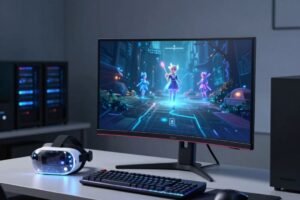
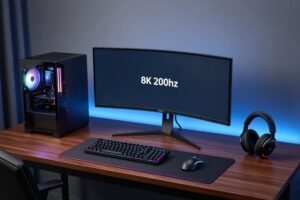
Gaming technology has become one of the fastest-growing areas of the technology industry. Modern gaming is no longer limited to playing games on a basic console or desktop computer. Today, gamers can choose from powerful gaming PCs, advanced consoles, handheld devices, gaming smartphones, virtual reality headsets, cloud gaming services, high-refresh-rate monitors, and intelligent gaming accessories.
The latest gaming technology trends are transforming how games are created, played, streamed, and shared. Artificial intelligence is improving game development and personalization, advanced graphics are creating realistic virtual worlds, and cloud technology is making games accessible across more devices. At the same time, virtual reality and mixed reality are introducing new ways to experience interactive entertainment.
Understanding these technologies can help gamers choose the right equipment, improve performance, and stay informed about the future of gaming.
What Is Gaming Technology?
Gaming technology refers to the hardware, software, networks, and digital systems used to create and play video games.
It includes everything from processors and graphics cards to gaming engines, controllers, displays, online platforms, and cloud infrastructure.
Major areas of gaming technology include:
- Gaming PCs and laptops
- Consoles
- Handheld gaming devices
- Gaming smartphones
- Graphics processing technology
- Gaming monitors
- Keyboards and mice
- Gaming headsets
- Virtual reality
- Cloud gaming
- Artificial intelligence
- Game development software
- Online gaming networks
These technologies work together to create the modern gaming experience.
Gaming PCs and Powerful Hardware
Gaming PCs remain one of the most flexible platforms for serious gamers.
A modern gaming PC typically includes a powerful CPU, graphics processing unit, RAM, fast storage, motherboard, power supply, and cooling system.
The graphics card is particularly important because it handles most of the visual rendering required by modern games.
High-end graphics hardware can support technologies such as ray tracing, advanced lighting, high-resolution textures, and AI-powered image enhancement.
However, building a gaming PC requires balance. A powerful graphics card paired with insufficient memory or an outdated processor may create performance limitations.
Gaming Consoles
Gaming consoles provide a simpler alternative to PC gaming.
Modern consoles combine powerful processors, advanced graphics hardware, high-speed storage, wireless connectivity, and specialized operating systems.
One major advantage of consoles is ease of use. Players can connect a console to a television and start gaming without building or configuring a computer.
Console ecosystems also provide digital game stores, online multiplayer services, cloud saves, and social features.
Future consoles are likely to become even more connected with cloud services and AI-powered features.
Handheld Gaming Technology
Handheld gaming has become an increasingly important part of the industry.
Modern portable gaming devices offer powerful processors, high-quality displays, physical controls, fast storage, and wireless connectivity.
Some handheld systems can run demanding games that traditionally required a PC or home console.
Portable gaming gives players more flexibility because they can play while traveling or away from their main gaming setup.
Future handheld devices could benefit from improved batteries, more efficient processors, better cooling, and faster wireless connectivity.
Gaming Smartphones
Smartphones have become capable gaming platforms.
Modern mobile processors can handle advanced graphics and demanding games, while high-refresh-rate displays provide smoother visuals.
Gaming smartphones may also include specialized cooling systems, larger batteries, gaming modes, and support for external accessories.
Mobile gaming is particularly attractive because smartphones are already widely owned and can provide gaming access without requiring a dedicated system.
Graphics Technology
Graphics technology is essential for modern gaming.
Graphics processing units render the images and effects players see on screen.
Advanced graphics technologies can provide realistic lighting, shadows, reflections, textures, and environmental effects.
Ray tracing is one example of technology designed to improve lighting realism.
AI-based upscaling and image reconstruction can also help games achieve high visual quality while maintaining strong performance.
As graphics hardware improves, developers can create increasingly detailed virtual environments.
Gaming Monitors
The gaming monitor has a major influence on how a game looks and feels.
Important specifications include:
- Resolution
- Refresh rate
- Response time
- Panel technology
- HDR support
- Adaptive synchronization
- Screen size
- Aspect ratio
Competitive gamers often prioritize high refresh rates and fast response times, while players focused on cinematic experiences may prefer high resolution and image quality.
The ideal monitor should match the capabilities of the gaming hardware.
Gaming Keyboards and Mice
PC gamers rely heavily on keyboards and mice.
Mechanical keyboards are popular because they offer tactile feedback, durability, and customizable switches.
Gaming mice can provide high-precision sensors, adjustable sensitivity, programmable buttons, and lightweight designs.
Competitive gamers may benefit from low-latency peripherals and precise controls.
However, comfort should also be a major consideration because gaming sessions can last for several hours.
Gaming Headsets and Audio Technology
Audio can significantly affect immersion.
Modern gaming headsets provide detailed sound, microphones, wireless connectivity, noise cancellation, and spatial audio.
Spatial audio can help players understand where sounds originate.
This can improve immersion and may provide competitive advantages in games where directional sound is important.
Future gaming audio could use AI to automatically optimize sound based on the environment and player’s preferences.
Artificial Intelligence in Gaming
Artificial intelligence is transforming both game development and gameplay.
Developers can use AI to create more sophisticated non-player characters, test games, analyze player behavior, and assist with certain content creation tasks.
AI can also personalize the player experience.
A game could potentially adjust difficulty, recommendations, or assistance based on how an individual player performs.
AI-powered tools may also help developers reduce repetitive work and spend more time on creative decisions.
Cloud Gaming Explained
Cloud gaming allows games to run on remote servers rather than relying entirely on the player’s local hardware.
The game is streamed to a supported device over the internet.
This can make demanding games available on devices that may not have powerful processors or graphics hardware.
The biggest limitation is network quality. A slow or unstable connection can cause delays, image-quality problems, or interruptions.
As internet infrastructure improves, cloud gaming could become increasingly important.
Virtual Reality Gaming
Virtual reality provides an immersive gaming experience by placing players inside digital environments.
VR headsets track head and sometimes body movement, allowing players to interact with virtual worlds.
VR can be particularly effective for simulation, adventure, fitness, and immersive entertainment.
Future VR hardware is expected to become lighter, more comfortable, and more powerful.
Mixed Reality Gaming
Mixed reality combines digital content with the physical environment.
This technology can allow virtual objects to appear within real spaces.
For gaming, this opens possibilities for interactive experiences that use rooms, furniture, and physical surroundings as part of gameplay.
Mixed reality could eventually create entirely new categories of games.
Cloud Saves and Connected Gaming
Modern gaming ecosystems increasingly rely on online services.
Cloud saves allow players to store game progress remotely and access it across supported devices.
Digital libraries, multiplayer services, achievements, social features, and game updates are also increasingly connected to online accounts.
This allows gaming experiences to become more flexible and portable.
Gaming Accessories and Peripherals
Accessories can enhance gaming comfort and performance.
Popular gaming accessories include:
- Controllers
- Gaming keyboards
- Gaming mice
- Headsets
- Microphones
- Gaming chairs
- Mouse pads
- Streaming cameras
- External storage
- Charging docks
- Gaming monitors
The best accessories depend on the type of gaming setup and personal preferences.
Game Development Technology
Behind every modern game is a complex collection of development technologies.
Game engines allow developers to create environments, characters, physics, animations, lighting, audio, and interactive systems.
Modern development tools can support advanced graphics, artificial intelligence, physics simulation, multiplayer networking, and cross-platform deployment.
AI-assisted development is also becoming increasingly important.
These tools can help developers automate testing and other repetitive processes while allowing creative teams to focus on design and storytelling.
Cross-Platform Gaming
Cross-platform gaming allows players on different supported platforms to play together.
This can expand multiplayer communities and make games more accessible.
Cross-platform progression can also allow players to continue their progress across multiple devices.
As consumers increasingly own smartphones, PCs, consoles, and handheld systems, cross-platform ecosystems may become more important.
Gaming and Streaming Technology
Gaming has become closely connected with online content creation.
Players can livestream gameplay, create tutorials, record reviews, and build online communities.
Modern hardware and software make it easier to capture and broadcast gameplay.
AI tools can assist creators with video editing, captions, highlights, and other content-production tasks.
Gaming is therefore becoming not only an entertainment industry but also a major digital content ecosystem.
Benefits of Modern Gaming Technology
The latest gaming technology provides several benefits.
Better Performance
Powerful hardware enables higher frame rates, faster loading, and more detailed graphics.
Greater Immersion
VR, spatial audio, advanced displays, and realistic graphics create deeper experiences.
Portability
Handheld devices and smartphones allow players to game from more locations.
Personalization
AI can adapt certain experiences to individual players.
Accessibility
Cloud gaming and cross-platform services can make games available on a wider range of devices.
Creativity
Advanced development tools allow developers to build increasingly complex worlds and gameplay systems.
Challenges in Gaming Technology
Technology also creates challenges for gamers and developers.
High-performance hardware can be expensive, and frequent upgrades may increase electronic waste.
Online gaming can create privacy and cybersecurity concerns.
Cloud gaming depends on reliable internet infrastructure.
AI-generated content raises questions about copyright, originality, and responsible use.
VR can also face challenges involving comfort, motion sickness, and accessibility.
The gaming industry will need to address these issues while continuing to innovate.
How to Choose the Right Gaming Technology
Gamers should consider their gaming habits before buying new technology.
Start by identifying the games you play most frequently. Competitive games may require high-refresh-rate displays and responsive peripherals, while story-driven games may benefit more from high-resolution graphics and immersive audio.
Budget is also important. Upgrading one key component may provide a bigger performance improvement than replacing an entire gaming setup.
Compatibility should also be checked before purchasing accessories or hardware.
Finally, consider durability, software support, security, and future upgrade possibilities.
Future of Gaming Technology
The future of gaming technology will likely involve greater integration between AI, cloud computing, advanced graphics, immersive reality, and portable hardware.
AI could make characters and game worlds more responsive. Cloud gaming could make high-quality games available across more devices. VR and mixed reality could introduce new forms of interactive entertainment.
Handheld gaming is also likely to continue growing as hardware becomes more powerful and efficient.
Gaming ecosystems may eventually become less dependent on a single device, allowing players to move between PCs, consoles, smartphones, handhelds, and immersive platforms.
Conclusion
Gaming technology is transforming the way people play, create, and experience games. From powerful gaming PCs and advanced consoles to AI, cloud gaming, VR, handheld devices, gaming smartphones, high-performance monitors, and intelligent accessories, the industry is moving toward a more connected and immersive future.
The most important development is the convergence of different technologies. AI can improve gameplay and development, cloud computing can expand access, and advanced hardware can deliver more realistic experiences.
For gamers, understanding these technologies makes it easier to choose the right equipment and keep up with industry changes.
As innovation continues, gaming will become increasingly intelligent, immersive, portable, and connected, creating exciting possibilities for players and developers around the world.